
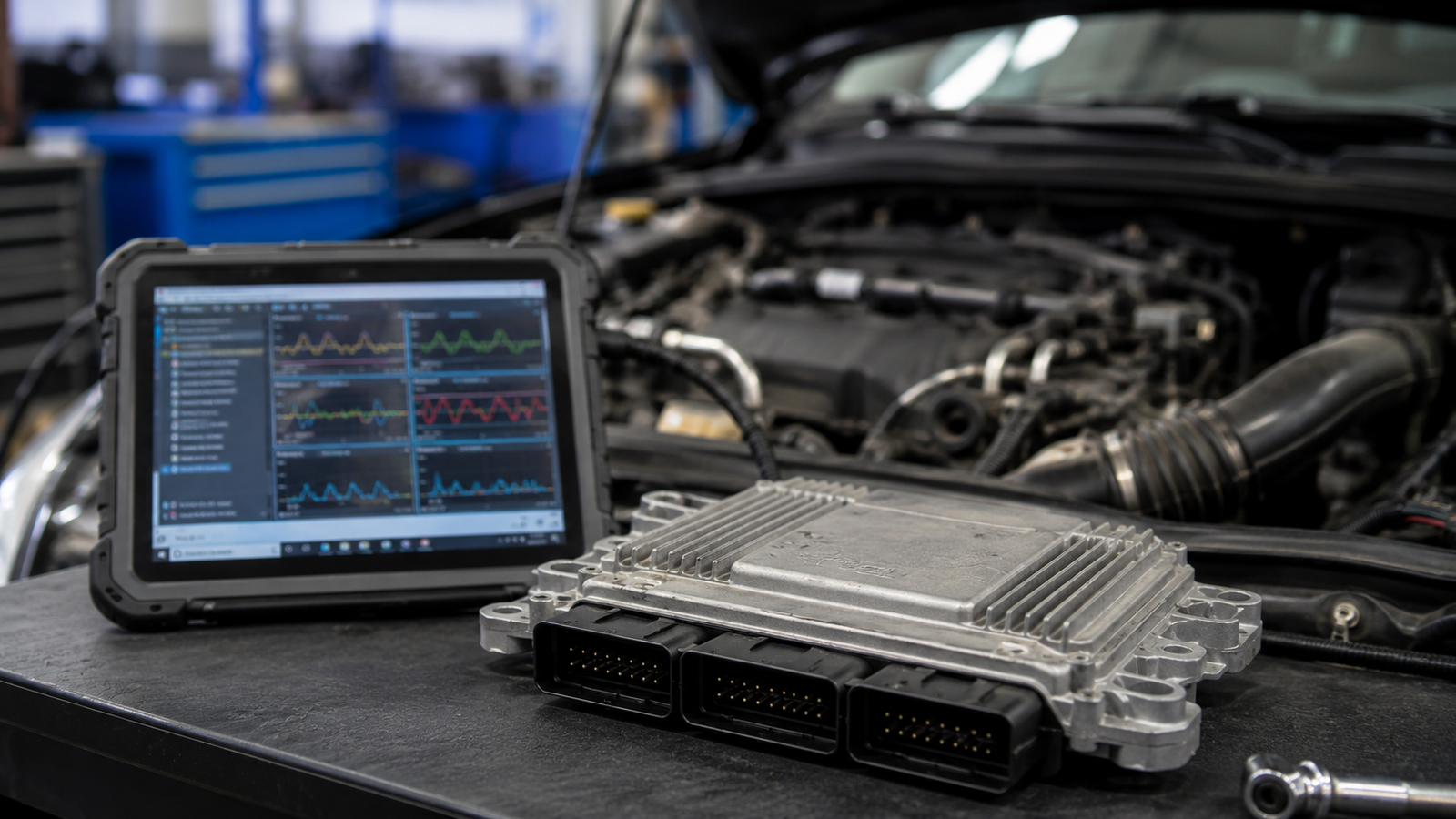
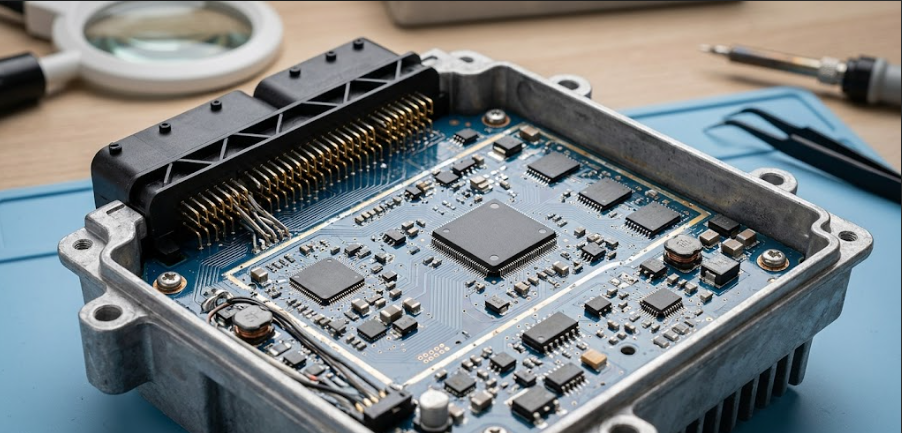
Modern vehicles depend heavily on electronic systems to deliver performance, efficiency, and reliability. At the centre of these systems is the Engine Control Unit (ECU), often referred to as the “brain” of the vehicle.
The ECU continuously monitors engine sensors and controls critical functions such as fuel injection, ignition timing, turbocharger operation, emissions systems, and overall engine performance. When the ECU develops a fault, it can create a wide range of symptoms that affect how your vehicle drives.
Understanding the warning signs of ECU failure can help you identify problems early and potentially save hundreds of pounds in unnecessary repairs.
What Is an ECU?
The Engine Control Unit is an electronic control module that processes information from various sensors throughout the vehicle. Based on this data, the ECU makes thousands of adjustments every second to optimise engine performance, fuel economy, and emissions.
Without a properly functioning ECU, modern vehicles cannot operate efficiently or reliably.
1. Engine Management Light Stays On
One of the most common indicators of ECU problems is an illuminated engine management light.
While many issues can trigger this warning, recurring fault codes that return after repairs may indicate an ECU fault rather than a sensor or mechanical problem.
Professional ECU testing can determine whether the control unit is correctly processing signals and communicating with the vehicle’s systems.
2. Intermittent Starting Problems
Does your vehicle sometimes start normally and other times refuse to start?
A failing ECU can cause intermittent communication failures with fuel injectors, ignition systems, or immobiliser components. These issues often become more frequent as the internal circuitry deteriorates.
Intermittent starting faults are particularly common in ECUs affected by water damage or failing solder joints.
3. Poor Fuel Economy
If you’ve noticed a sudden drop in fuel efficiency without any obvious mechanical issues, the ECU may be sending incorrect commands to the engine.
Faulty fuel mapping calculations can result in:
- Excessive fuel consumption
- Rich fuel mixtures
- Increased emissions
- Reduced engine efficiency
A diagnostic inspection can help determine whether the ECU is contributing to the problem.
4. Engine Misfires and Rough Running
The ECU controls ignition timing and fuel delivery. When it cannot accurately process information from sensors, the engine may begin to:
- Misfire under load
- Idle roughly
- Hesitate during acceleration
- Stall unexpectedly
These symptoms are often mistaken for ignition coil, injector, or spark plug failures.
5. Vehicle Enters Limp Mode
Modern vehicles use a protective strategy known as limp mode when serious faults are detected.
If the ECU identifies an internal problem or receives conflicting information from key sensors, it may restrict engine power to prevent further damage.
Common signs include:
- Limited acceleration
- Reduced engine speed
- Warning lights appearing on the dashboard
- Restricted vehicle performance
6. Communication Fault Codes
Many ECU failures present as communication-related diagnostic trouble codes.
Technicians may encounter faults indicating that modules are unable to communicate with one another across the vehicle’s network.
Because modern vehicles rely on multiple control modules working together, communication errors can cause a variety of electrical and performance issues.
7. Water Damage and Electrical Faults
Water ingress remains one of the leading causes of ECU failure.
Moisture can enter the ECU housing through damaged seals, accident damage, blocked drainage systems, or poor mounting locations.
Common symptoms include:
- Multiple fault codes
- Intermittent operation
- Corrosion-related failures
- Complete ECU shutdown
Early diagnosis is critical, as water damage often worsens over time.
ECU Repair vs ECU Replacement
Many drivers assume that ECU replacement is the only solution when a fault occurs. However, professional ECU repair can often restore the original unit at a significantly lower cost.
Benefits of ECU repair include:
- Reduced repair costs
- Faster turnaround times
- Retention of original vehicle programming
- Reduced need for coding and adaptation
- Environmentally friendly solution
In situations where repair is not possible, professionally prepared replacement ECUs can provide a reliable alternative.
Why Professional ECU Testing Matters
ECU faults are frequently misdiagnosed because their symptoms can mimic other mechanical and electrical problems.
Replacing sensors, injectors, batteries, or wiring without confirming the root cause can quickly become expensive.
Professional ECU testing uses specialist diagnostic equipment to verify whether the control unit is functioning correctly before repairs are carried out.
This approach saves time, reduces costs, and ensures the correct solution is identified from the start.
Final Thoughts
A faulty ECU can affect nearly every aspect of your vehicle’s performance, from fuel economy and starting reliability to engine power and emissions.
If you’re experiencing persistent fault codes, intermittent starting problems, poor performance, or unexplained electrical issues, professional ECU testing should be one of the first diagnostic steps.
Early diagnosis and repair can often prevent more serious problems and help keep your vehicle running reliably for years to come.